ThermaTechSpace thermal management

Product center

The ThermaTech product spectrum: spacecraft thermal control, electronics & equipment, thermal-conductive materials and technical services. Each entry gives its role and specifications. Full datasheets and ICDs are available on request.

Spacecraft thermal-control products

Thermal-control coatings

Thermal-control coatings

Surface materials that tune solar absorptivity and hemispherical emissivity to control spacecraft surface temperature. GJB-tested and used on hundreds of commercial satellites.

NameEmissivityAbsorptivity
Black paint (E51-M)0.88±0.020.93±0.02
Black paint (ERB-2B)0.87±0.020.93±0.02
White paint (KS-Z)0.92±0.020.14±0.02
White paint (SR107)0.87±0.020.17±0.02
White paint (SR107-ZK)0.87±0.020.16±0.02
Anti-static white paint (ACR)0.85±0.040.21±0.04
White paint (WH series)0.87±0.020.21±0.02

Test standards: GJB 2502.1-2015 / 2502.7-2015 / 2502.8-2006 / 2502.10-2015.
Multi-layer insulation (MLI)

High thermal resistance from reflections between reflective screens, delivering excellent insulation in vacuum. Effective emissivity 0.016–0.036; high/mid/low-temperature series customizable in unit count, shape and size.

ProductOperating temperatureWeight per unit / unit countFlight heritage
Low-temperature MLI-196 ~ +120 ℃18.2 g/m²;5、10、15、20、30 unitsFlight-proven on 200+ satellites
Mid-temperature MLI0 ~ +300 ℃100–156 g/m²;5–10 unitsFlight-proven on 200+ satellites
High-temperature MLI+300 ~ +1200 ℃0.22 kg/m²;1–5 unitsKuaizhou rocket; qualification test passed
Film heaters

Film heaters

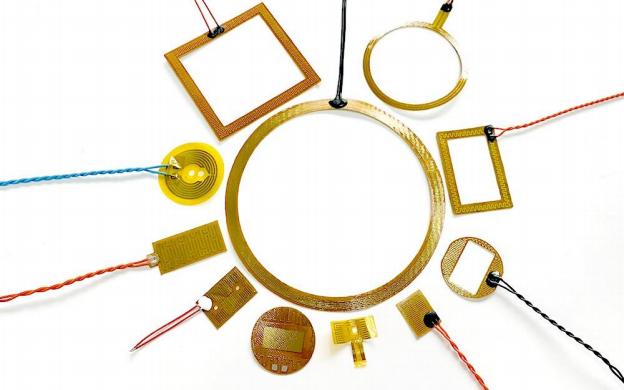
Space-grade polyimide film heating elements: lightweight, high resistance density and custom shapes for payload and component insulation.

ItemHigh-resistance-density film heaterType 125 film heater
Operating range-60 ~ 200 ℃-60 ~ 125 ℃
Humidity range≤96% RH≤96% RH
Insulation resistance≥200 MΩ at 250 V DC≥200 MΩ at 250 V DC
Resistance toleranceUp to ±0.5% or ±0.2 ΩUp to ±1% or ±0.5 Ω
Power densityTypically ≤3 W/cm² (application-dependent)Typically ≤3 W/cm² (application-dependent)
Resistance density8–50 Ω/cm²—
Thickness0.1–0.2 mm≤0.5 mm
Mass0.025–0.040 g/cm²0.015–0.025 g/cm²
Minimum bend radiusRmin = 1 mmRmin = 1 mm
Corrosion resistanceResistant to acid and alkali corrosionResistant to acid and alkali corrosion
Temperature coefficient of resistance7.67×10⁻⁵ /Ω/℃7.67×10⁻⁵ /Ω/℃
InstallationAdhesive bonding or mechanical fasteningWrap-around adhesive bonding

Fluid loops (single-phase / two-phase)

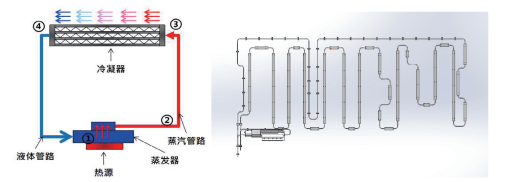
Mechanical pump, evaporator, condenser, reservoir and tubing for heat collection and rejection, with flight heritage on Shenzhou and Tiangong missions. Two-phase loops serve extreme heat flux and large-area/multi-source rejection.

ItemSingle-phaseTwo-phase
Pressure ratingcustom on request≤5 MPa
Max heat flux—>350 W/cm²
Flow rate—0–40 L/h
Operating range-60 ~ +40 ℃-60 ~ +60 ℃
Control accuracy±1 ℃±1 ℃
Deployable radiators

Deployable radiators

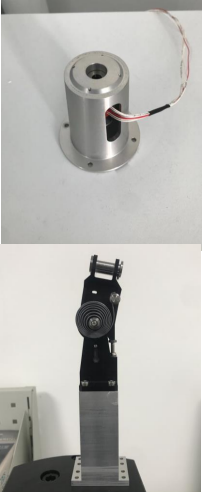
Radiators that deploy when satellite temperature rises, meeting whole-satellite thermal-control needs. Our product has completed an on-orbit deployment on a spacecraft model.

Grooved heat pipes

Grooved heat pipes

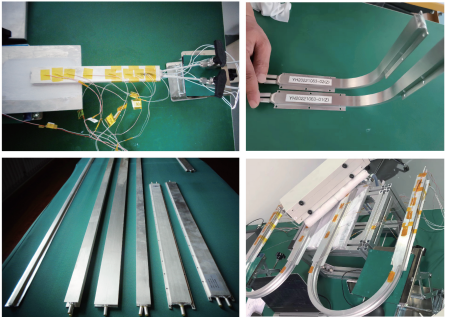
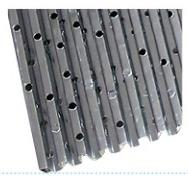
Closed two-phase loop driven by capillary action in the grooves: high efficiency, good isothermality and reliability. Applied on multiple satellites with no in-orbit failures.

ModelSingle-groove capacity at 20 ℃ (W·m)Linear density (g/m)
I-section 30×11.4(Q) single-groove ammonia axial heat pipe247.0344.07
I-section 30×15(Q) single-groove ammonia axial heat pipe450.0401.7
I-section 50×10(Q) single-groove ammonia axial heat pipe180495 (finned on request)
I-section 30×9.1(Q) dual-groove ammonia axial heat pipe111.6389
I-section 30×12(Q) single-groove ammonia axial heat pipe196349
I-section 30×19.1(Q) dual-groove ammonia axial heat pipe180452
I-section 30×24.1(O) dual-groove ammonia axial heat pipe343539
I-section 30×39.1(O) dual-groove ammonia axial heat pipe387643
I-section 30×29.1(Q) dual-groove ammonia axial heat pipe649800
I-section 50×14.1(Q) ammonia axial heat pipe336574
I-section 40×14.1(Q) dual-groove ammonia axial heat pipe336695
42×9 phase-change heat pipe35650
Flat heat pipes / vapor chambers (VC)

Flat heat pipes / vapor chambers (VC)

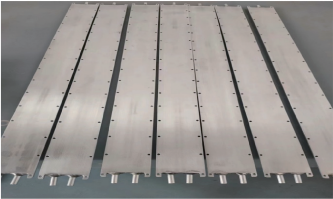
Can replace structural parts while providing both structural and thermal performance for signal-processing, power-supply, VPX/CPCI and air-cooled chassis. Flight-proven on multiple models. Core processes: wick sintering and precision fluid charging.

Effective conductivity1000–3000 W/m·K
Max heat flux≥250 W/cm²
Thermal resistance≤0.1 ℃/W
Storage range-60 ~ +120 ℃
Operating range-55 ~ +120 ℃(special up to 200 ℃ and above)
Max outline area1200 mm × 500 mm
Min chamber thickness1.5 mm
Housing materialsaluminum, copper, titanium, stainless steel
Service life>30 years
Phase-change heat pipes

Phase-change heat pipes

Efficient heat transfer plus phase-change energy storage, with selectable phase-change range. Mainly for phased-array antenna thermal control; can be charged with paraffin-type PCMs and customized.

Phase-change range-30 ~ +90 ℃(optional)
Reference latent heat per length8433 J/m
Orientationhorizontal, or heat source below
Temperature stability≤1 ℃
Heat-transfer capacity32 W·m
Dimensions30 mm × 9 mm; custom length
Loop heat pipes (LHP)

Loop heat pipes (LHP)

High-heat-flux point-to-point transfer with flexible tubing, long distance and strong anti-gravity capability, for heat extraction from tight satellite spaces and ground equipment thermal control.

Operating range-60 ~ +60 ℃
Heat-transfer distance≥10 m
Anti-gravity lift≥5 m
Acceleration load≥10 g
Maximum heat flux≥10 W/cm²
Control accuracy±1 ℃
Evaporator thermal resistance≤0.02 K/W
Mechanical interfacecustom on request
Electrical interfacepowered by heaters and semiconductor coolers
Thermal pads

Thermal pads

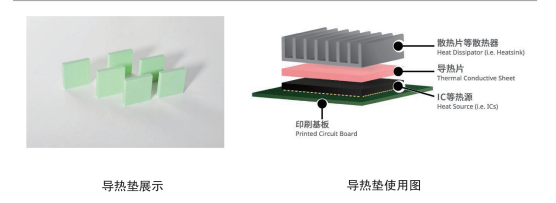
High-performance gap-filling interface material between electronic devices and heatsinks/enclosures, expelling air and fitting tightly. Thickness 0.3–1.5 mm; passed thermal, radiation and tensile qualification tests.

GradeOperating temperatureInterface conductance (20 ℃)Hardness HATensile strength
WH-DRD001-60 ~ +180 ℃≥2000 W/m²·K≥80≥0.12 MPa
WH-DRD002-60 ~ +180 ℃≥3000 W/m²·K≥35≥0.12 MPa

TML / CVCM / WVR compliant; total ionizing dose 2.3×10⁵ rad (Si) passed.

Temperature sensors

Temperature sensors

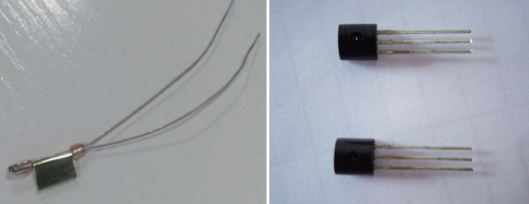
Core elements of temperature instruments, contact and non-contact types, resistive and thermocouple. Thermistors are small, sensitive and stable; one-wire sensors are light and support multi-point layouts.

ModelMeasurement range (℃)Operating range (℃)AccuracyNotes
MF501-40 ~ +70-55 ~ +125(-30 ~ 60 ℃) ±0.3 ℃; other ranges ±0.5 ℃interchangeable thermistor
MF61-20 ~ +60-55 ~ +125(-20 ~ 60 ℃) ±0.3 ℃interchangeable thermistor
MF61-20 ~ +60-55 ~ +125±0.1℃non-interchangeable
MF5604(A2)-196 ~ -50-196 ~ +125(77K ~ 223K) ±0.1 ℃low temperature
MF5802(B4)-100 ~ +100-196 ~ +125(-40 ~ 70 ℃) ±0.3 ℃; other ranges ±1 ℃low temperature
MF5408+100 ~ +450-60 ~ +450±1℃high temperature
18B20-40 ~ +70-55 ~ +125(-10 ~ 80 ℃) ±0.5 ℃one-wire temperature sensor
Heat-flux meters

Heat-flux meters

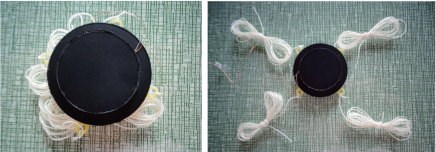
Sensors measuring radiative heat flux absorbed by spacecraft surfaces in thermal-vacuum tests: fast response, high accuracy and reliability, widely used in thermal-balance tests of spacecraft and payloads.

DimensionsΦ40 mm
Heat-flux measurement range50 ~ 2000 W/m²
Thermocouples

Thermocouples

Type-T (copper–constantan) thermocouples for ground thermal-vacuum testing of spacecraft: accurate measurement, wide range and good environmental adaptability.

Measurement range-196 ~ +200 ℃
Measurement accuracy±0.3 ℃ ~ ±1 ℃
Temperature controllers

Temperature controllers

Integrated digital intelligent temperature controllers: compact and robust with clear display, system protection, parameter storage and output indication. Proven on a new UAV model.

FunctionsTemperature measurement and control; primary and backup units
Channels8 temperature-control channels
Weightcustom on request
Dimensionscustom on request

Structurally integrated panels

Panels designed with structure and thermal control as one, sharing load-bearing and heat-transfer paths.

Spacecraft structural products

Structural panels and other structural products for satellites.

Thermal grease

Paste-type thermal interface material that reduces contact thermal resistance.

Graphite materials

Graphite-based thermal-conduction and insulation components.

Electronics & equipment thermal-control products

Cold plates

Cold plates

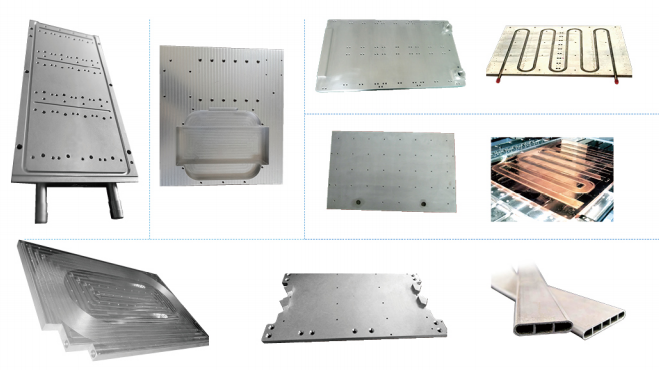
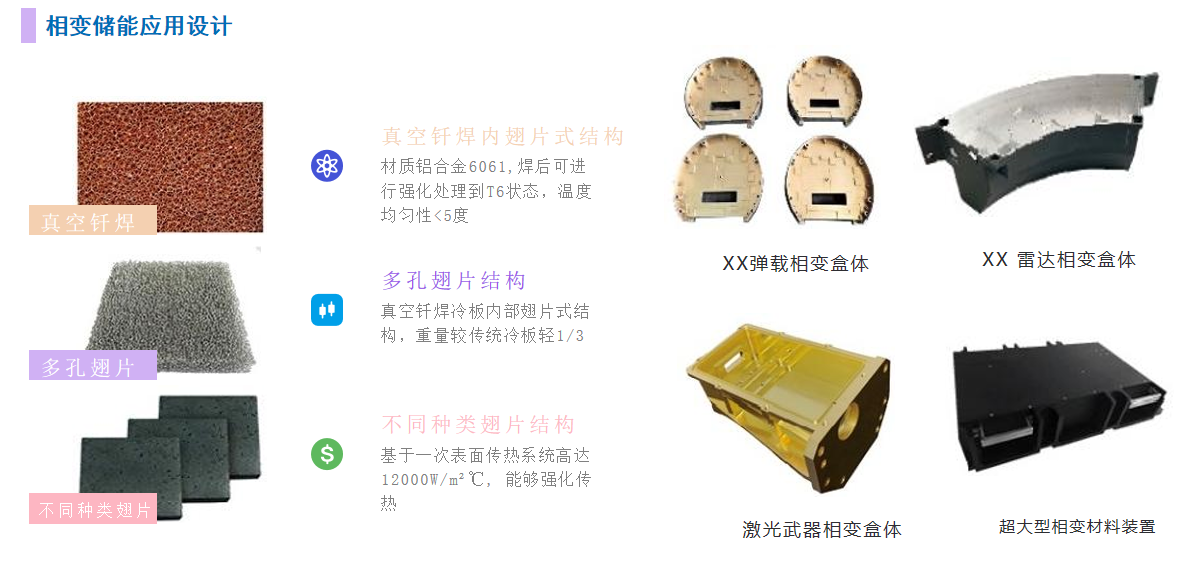
Cold plates with internal liquid channels for high-power, high-heat-flux electronics, built by vacuum diffusion welding, vacuum brazing, friction-stir welding, electron-beam welding or embedded copper tubing for IGBT, CPU, GPU and power amplifiers. Low flow resistance, high strength, corrosion resistant.

Advantages: 6061 aluminum alloy, hardenable to T6 after welding with <5 ℃ temperature uniformity; vacuum-brazed finned structure one-third lighter than conventional cold plates; primary-surface heat transfer up to 12000 W/m²·℃; pressure-diffusion-welded plates rated above 3.0 MPa; vacuum-brazed plates support stepped channel layouts. Standards: GJB 150A / GJB 441 / GJB/Z 27 / HB 6434 / HB 7390.

Chassis

Chassis

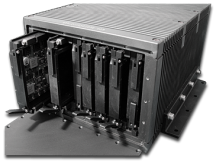
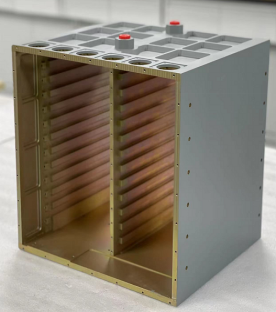
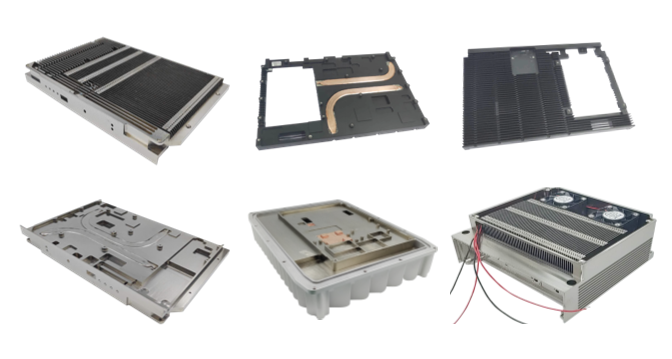
Military chassis in air-cooled, liquid-cooled, natural and combined forms; liquid-cooled chassis support side-wall, module and board-level channels. Welded as one piece for strength and EMI shielding, with customization.

Advantages: high-conductivity vapor chambers for high-power devices; complete water–electricity separation for reliability and lifetime; fewer fluid fittings for lower cost; internal fins reaching 12000 W/m²·℃ per unit volume; standard 6U chassis up to 4.5 kg lighter than conventional designs. Standards: GJB 150A / 441 / 779 / 780, GJB/Z 27, HB 6434, HB 7390.

High-temperature heat pipes & heat exchangers

High-temperature heat pipes & heat exchangers

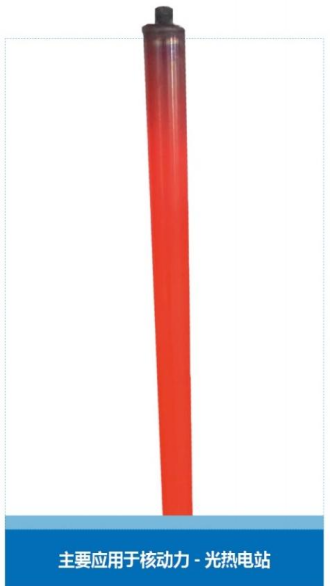
Operating range 450–1000 ℃: low saturated vapor pressure, small thermal stress, simple structure. Developed to engineering application; wicks can be mesh, felt, grooved or combined. Suitable for hypersonic thermal protection, space nuclear-reactor cooling, solar plants and Stirling engines.

Max heat flux≥10 kW/cm²
Operating range550–1000 ℃
Air-cooled thermosyphons for servers

Air-cooled thermosyphons for servers

Gravity- and capillary-driven two-phase heat-transfer devices, mainly for server heatsinks.

Thermal resistance≤0.12
Heat-transfer capacity≥250 W
Heat-transfer distance≥1000 mm
Cold plates for PV IGBT and new-energy vehicles

Cold plates for PV IGBT and new-energy vehicles

Circulating-liquid cold plates for high-power electronics, made by vacuum diffusion welding, vacuum brazing, friction-stir welding, electron-beam welding or embedded copper tubing for IGBT, CPU, GPU, SVG, resistors and amplifiers. Low flow resistance, high strength, corrosion resistant; mainly used as server heatsinks.

Heat-pipe heatsink modules

Heat-pipe heatsink modules

Long-distance heat transfer using latent heat of evaporation: solid conductivities 250–1500 W/mK, effective heat-pipe conductivity 5000–200000 W/mK. Integrated with structural parts by soldering or adhesive, for signal-processing, power-supply, VPX, CPCI and air-cooled chassis in aviation, space, naval, radar and defense electronics.

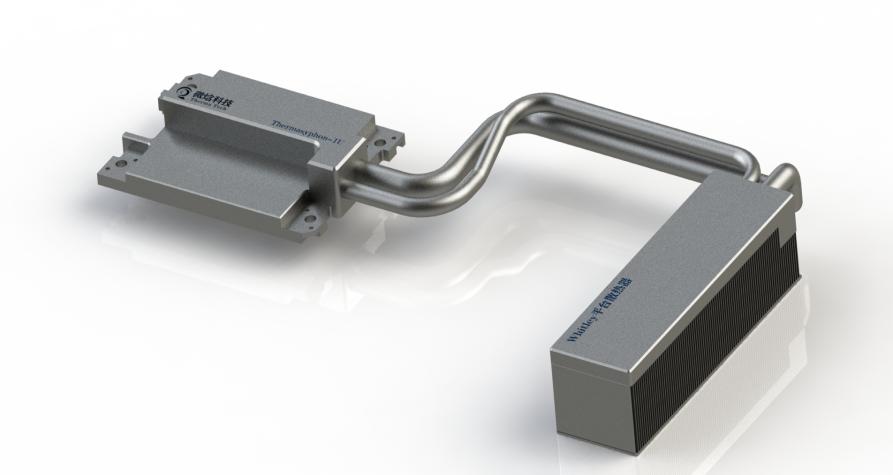
3DVC / Thermasyphon heatsinks

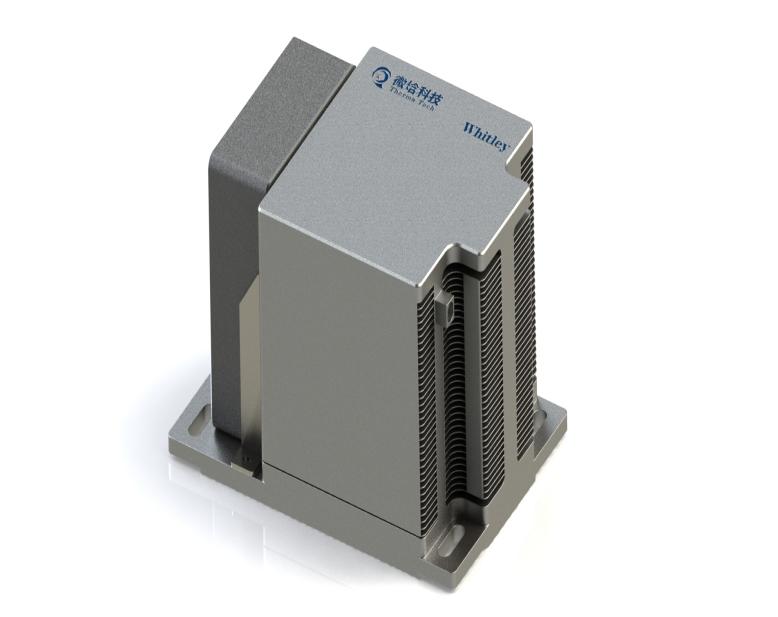
1U/2U models at 350 W / 400 W / 550 W for Whitley, Eagle Stream and Power platforms, including isolated liquid-cooled variants. Detailed specifications on request.

3DVC-2U (Whitley) / 3DVC-2U (Eagle Stream, 550 W) / Thermasyphon-2U (Power, 400 W) / Thermasyphon-2U (Eagle Stream, 550 W) / Thermasyphon-2U (Eagle Stream, 350 W) / Thermasyphon-1U (Whitley) / Thermasyphon-1U (Eagle Stream, 350 W) isolated liquid cooling

HiK plates (heat-pipe-embedded heatsinks)

Heat pipes embedded in structural panels: effective heat-pipe conductivity 5000–200000 W/mK, whole-plate effective conductivity 600–1200 W/mK or higher. For distributed cooling of multiple high-power components, moving heat to a liquid or air heat sink with a small temperature gradient; lower cost than vapor chambers and other thermal-control materials.

Working-fluid charging systems (production equipment)

High-vacuum, high-precision fluid charging equipment for two-phase cooling products; the vacuum system reduces non-condensable gases.

System vacuumBetter than 1×10⁻³ Pa
Charging accuracyBetter than ±0.1 g
Charging rate1 unit/min
Phase-change energy storage devices

Phase-change energy storage devices

PCMs that absorb or release heat automatically with ambient temperature to flatten the thermal environment. Our solid–liquid and solid–solid PCMs are chemically stable, high-enthalpy, narrow-transition and long-lived: 30+ years at room temperature, 20000+ phase cycles, non-toxic, non-corrosive and non-hazardous. For peak shaving, new energy, waste-heat recovery and aerospace thermal-control components.

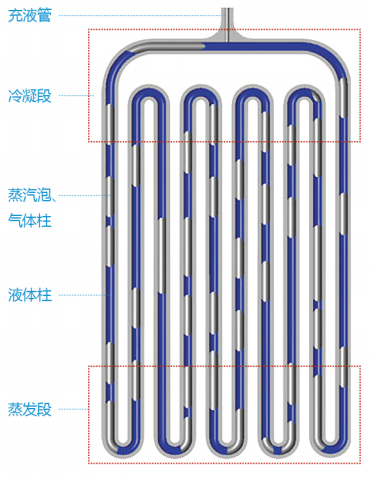
Pulsating heat pipes (PHP)

Pulsating heat pipes (PHP)

Directional fluid motion driven by pulsating pressure from bubble growth and collapse. No sintered wick, less gravity-affected than conventional heat pipes, high heat-transfer performance.

High-conductivity metal composite panels

High-conductivity metal composite panels

Metal-matrix composites that cut weight while significantly lowering chip and electrode heat-source temperatures. Core processes include gold/silver/copper/titanium metallization and brazing/diffusion welding; in-house diamond/copper and SiC/aluminum composites with high conductivity, low expansion and low weight for chip heat sinks, package substrates and vertical-chip substrates. T/R module housings use highly annealed pyrolytic graphite.

Air-cooled vapor chambers

VC integrated with fins in one piece or welded composites, also combinable with heat pipes. Full-service design, manufacture and factory testing.

Effective conductivity≥2000 W/m·K
Max heat flux≥10 W/cm²
Min chamber thickness5 mm
Fin thickness0.2–2 mm
Minimum fin spacing0.5 mm
Operating range-55 ~ +100 ℃
Housing materialsaluminum, copper, titanium, stainless steel

Typical applications: IGBT and other high-heat-flux, compact power electronics.

Thermal-conductive materials

High-conductivity material series

Materials for thermal interfaces and structural conduction, with metallized encapsulation or adhesive backing options.

MaterialThicknessThermal conductivityNotes
Hot-pressed graphite0.2–5 mmIn-plane >500 W/m·K; through-thickness >10 W/m·KMetallized encapsulation or adhesive backing available
Pyrolytic graphite0.2–10 mmIn-plane >1500 W/m·KMetallized encapsulation available; bondable to diamond
Diamond0.2–3 mm>2000 W/m·KComplex-structure bonding and microchannel machining available
Carbon foam2–50 mmIn-plane >100 W/m·K; through-thickness ~40 W/m·KPorosity >65%

Gap-filling thermal interface materials

Gap-filling TIMs between chips and heatsinks.

Graphene materials

Graphene-based high-conductivity components.

Diamond composites

Diamond-reinforced composite thermal-conduction materials.

Technical services & joint research

High-performance two-phase heat-dissipation research

High-performance two-phase heat-dissipation research

Using latent heat of phase change: 15× heat-dissipation capacity versus conventional liquid cooling, 60%+ lower power, 80%+ less working fluid, 10%+ lighter thermal-control system, with ±0.5 ℃ control accuracy. Applications include high-power electronics, energy-storage PCS, battery-pack thermal management and data-center chips; a 60 kW air-cooled compressor-free two-phase direct-cooling system has been built.

Lightweight, high-reliability, high-conductivity processes

Lightweight, high-reliability, high-conductivity processes

Graphene–aluminum composites reaching 3 mm thickness with 800 W/m·K conductivity, for satellites, radar and IGBT cooling, replacing aluminum-alloy and some phase-change vapor chambers to improve heat spreading and system stability.

Highly oriented pyrolytic graphite metallized encapsulation

Highly oriented pyrolytic graphite metallized encapsulation

Metallized encapsulation processes for highly oriented pyrolytic graphite, enabling high-conductivity, weldable structural thermal components.

Al-Si & Al-SiC devices and cold plates

Al-Si & Al-SiC devices and cold plates

Devices and cold plates in Al-Si and aluminum silicon-carbide for high-power electronic packaging requiring low expansion and high conductivity.