ThermaTechSpace thermal management

PRODUCT SPECTRUM · DESIGN SPECIFICATIONS

ThermaTech Research Institute

Xuanbing compute-satellite platform

A liquid-cooled, structurally integrated flat satellite platform for on-orbit inference and training. Two models in the spectrum: Xuanbing 500 and Xuanbing 5000.

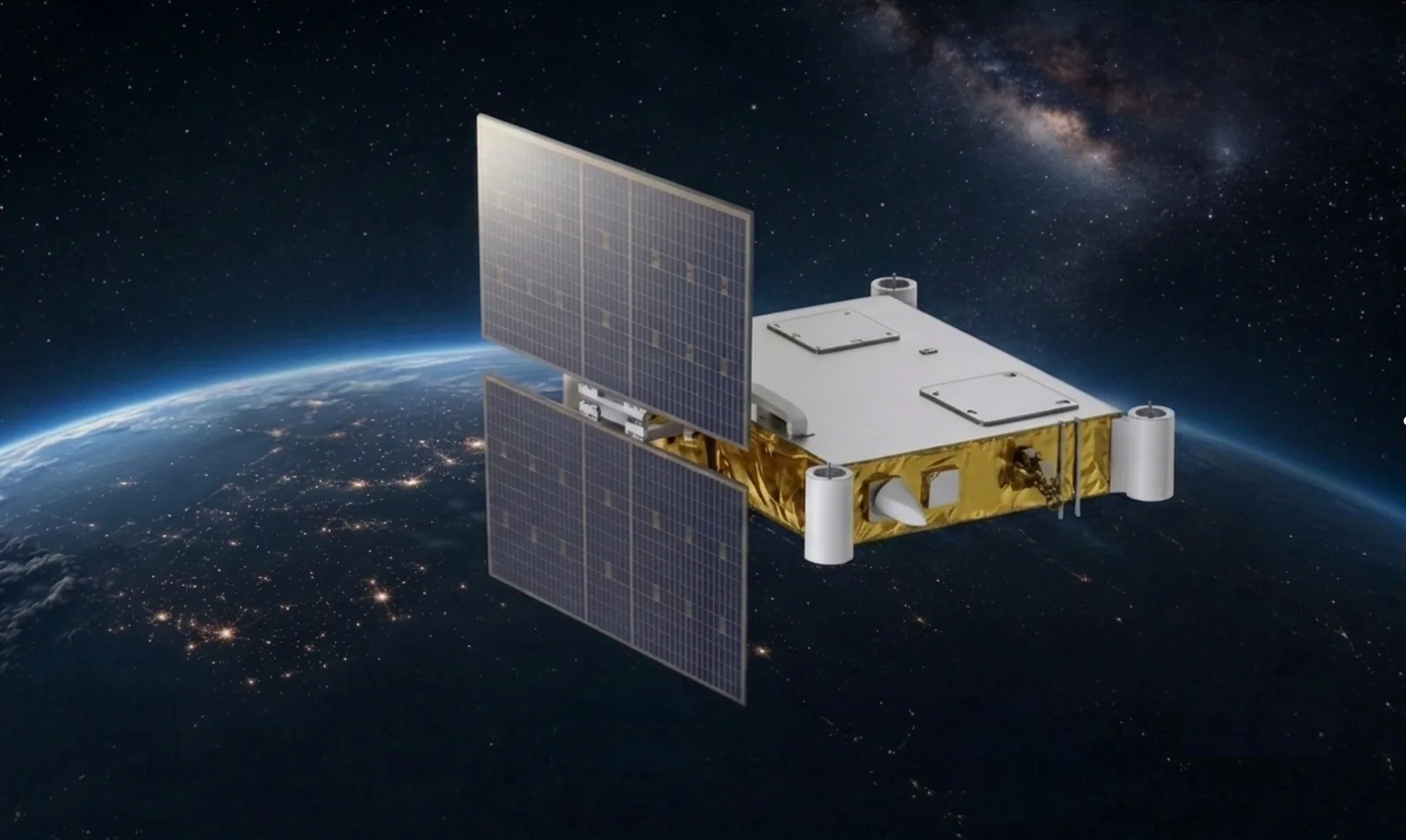
Xuanbing 500 concept illustration

Xuanbing 500

  • Liquid cooling capacity≥2 kW
  • INT8 compute≥1000 TOPS
  • Platform mass~50 kg(supports a 200 kg satellite)

Illustration, not a photo.

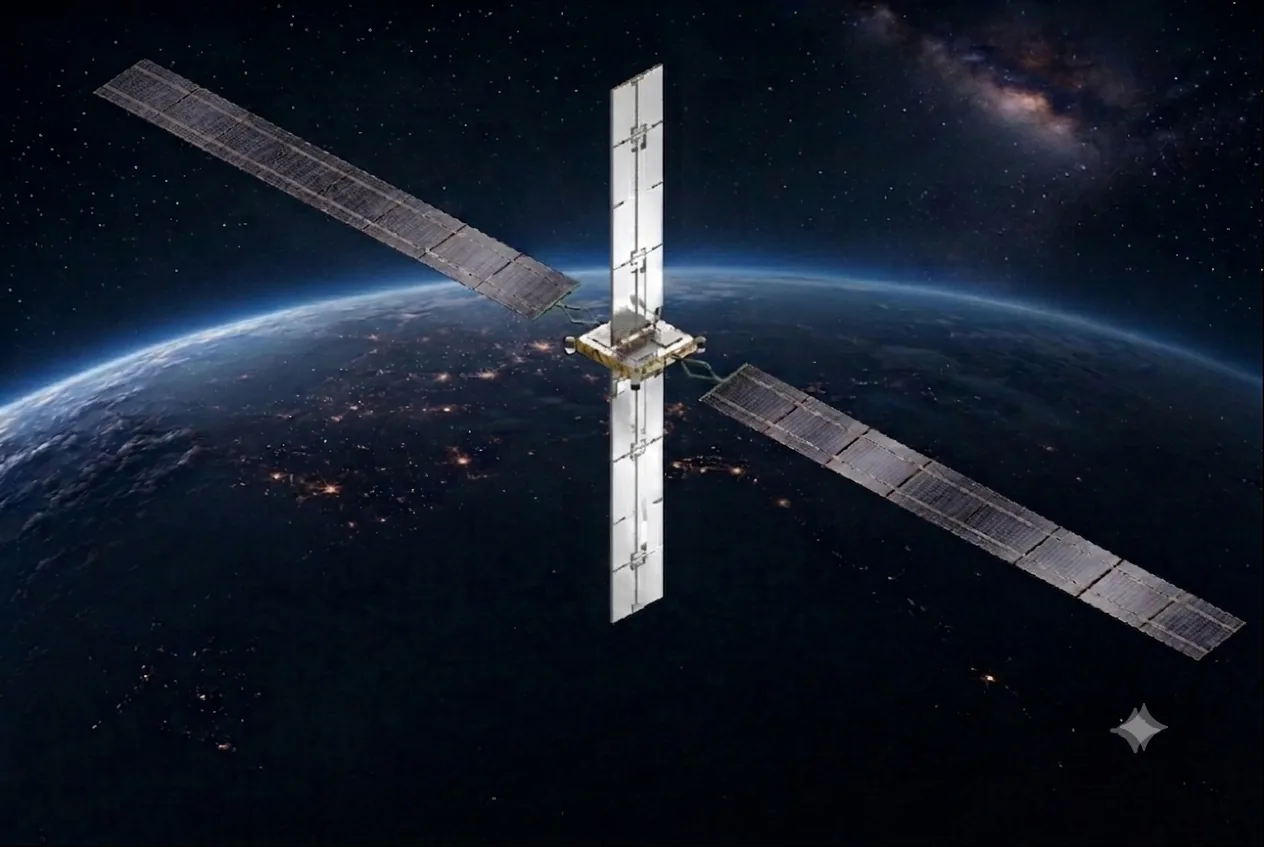
Xuanbing 5000 concept illustration

Xuanbing 5000

  • Liquid cooling capacity≥5 kW
  • INT8 compute≥9895 TOPS
  • Platform mass~65 kg(supports a 300 kg satellite)

Illustration, not a photo.

Overview

Xuanbing integrates structure and thermal control in a roughly 0.2 m-thick flat panel; solar wings, attitude & orbit control, propulsion, power distribution and avionics are configured per mission.

Liquid cooling capacity spans 2 kW to 5 kW and above by model; payload temperature is specified at ≤40 ℃ under full load, with design life of at least 10 years. Compute-board interfaces are reserved for NVIDIA, Huawei Ascend and Hygon specifications: 1 board on Xuanbing 500 and 5 or more on Xuanbing 5000.

Intended uses include space-based AI compute, on-orbit remote-sensing processing, edge inference and constellation networking. The table below lists design specifications, not in-orbit measurements.

Design highlights

Structural–thermal integration

The platform is designed around liquid cooling from the first drawing: structural parts are the heat path, eliminating the contact resistance between structure and radiator. Xuanbing 500 uses a glycol/water loop for ≥2 kW of liquid cooling; Xuanbing 5000 upgrades to a full-ammonia (NH₃) loop for ≥5 kW, keeping GPUs below 40 ℃ at full load in orbit. The 0.2 m flat-panel configuration unifies load-bearing and heat transfer for both stiffness and heat-rejection efficiency.

Lightweight design

Xuanbing 5000 carries a foldable flexible radiator: stowed inside the flat panel at launch and deployed in orbit to 10 m² or more. Power comes from HJT flexible solar wings (50–70 μm cells, rolled for launch and deployed in orbit to about 20 m²; a comparable all-flexible wing was flight-proven on Lingxi-03 in 2023). Mass-to-power ratio is 16.67 kW per tonne. The flat-panel form also supports stacked multi-satellite launches, cutting per-satellite deployment cost.

Autonomous health management

Capabilities include state sensing, fault diagnosis (response <1 s, accuracy >95%), lifetime prediction, autonomous recovery (success rate >99%), digital twin and shadow verification, organized as an L0–L4 intelligent stack: an L0 hardware safety cage for millisecond-level fallback, L3 dynamic multi-card task allocation, and L4 constellation-level scheduling across 50–100 satellites. The liquid loop itself is instrumented with high-precision flow and pressure sensing, so pump degradation, leaks and blockages are flagged early.

Specifications

ItemXuanbing 500Xuanbing 5000
Platform
Platform dimensions2000×1500×200 mm1800×1800×200 mm
Platform mass~50 kg(supports a 200 kg satellite)~65 kg(supports a 300 kg satellite)
Platform power250 W600 W
Design life≥10 years≥10 years
Compute & payload
Compute boardsNVIDIA / Huawei Ascend / Hygon, 1 boardNVIDIA / Huawei Ascend / Hygon, ≥5 boards
INT8 compute≥1000 TOPS≥9895 TOPS
On-orbit tasksinference, remote-sensing interpretation, data fusiontraining, inference, multi-satellite cooperation
Payload operating temperature≤40℃≤40℃
Thermal control
Working-fluid loopglycol/water solutionfull-ammonia (NH₃) loop
Liquid cooling capacity≥2 kW≥5 kW
Liquid flow rate≥5 LPM≥10 LPM
Radiator arearigid or deployable radiator,≤6 m²flexible deployable radiator,≤10 m²
Configurable systems
Power systemPower supply ≥2 kWPower supply ≥5 kW
Solar wingsrigid or flexible, size configurablerigid or flexible, size configurable
Solar-wing area (HJT flexible)mission-dependent≥20 m²
Other subsystemsAOCS, propulsion, power and avionics configurableAOCS, propulsion, power and avionics configurable
Health management
Functions coveredstate sensing, fault diagnosis, lifetime prediction, autonomous recovery, digital twin, shadow verificationstate sensing, fault diagnosis, lifetime prediction, autonomous recovery, digital twin, shadow verification
Advanced functions (5000 only)—GPU fault isolation, task migration and ECC alerts; L3 dynamic multi-card task allocation, L4 constellation-level scheduling across 50–100 satellites

Values are design specifications, not in-orbit measurements.

Custom configurations

On top of the modular base, the Xuanbing series supports mission-specific options: Hall-effect thrusters, laser terminals, RF modules, sun sensors, star trackers and phased-array antennas, with frame extension and external mounting supported. Compute-board interfaces are reserved for NVIDIA, Huawei Ascend and Hygon specifications.

Roadmap

Xuanbing 10K, Xuanbing 30K and Xuanbing 100K are under development and validation.